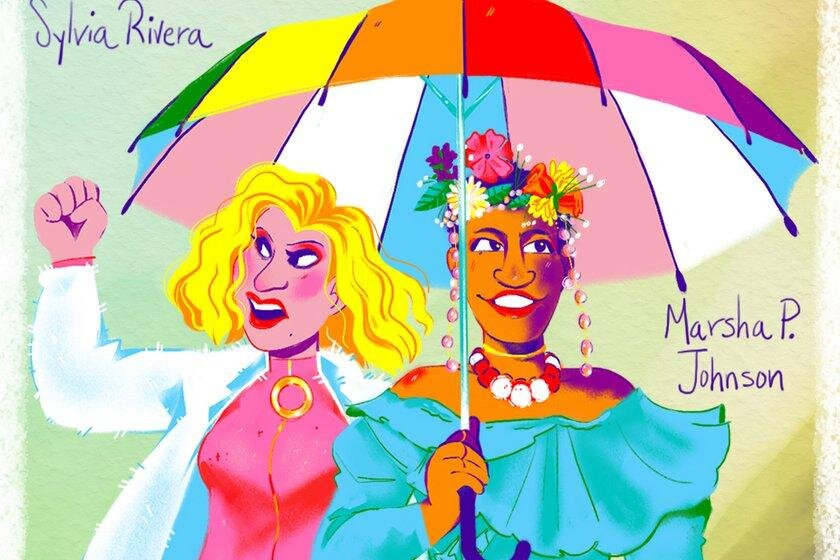
PRIDE 2020“Before I met you, everything was in black and white and that kind of thinking don’t work in a gray world. You taught me to appreciate life and treasure every breath. You adjusted my focus and now I see in color.” -FX’s POSE In the month of June, communities across the US celebrate Pride Month. It is time usually marked by marches, parades, and even multinational corporations flashing the rainbow colors. While these gains in visibility are important, they did not magically appear. Like so many civil rights achievements, they had to be fought for. There are historical moments that helped push LGBTQ visibility onto the national stage in an effort to roll back reactionary anti-gay laws that criminalized LGBTQ+ folks for gathering and socializing in public. In May of 1959 in Los Angeles at Cooper’s Do-nuts and in August 1966 at Compton’s Cafeteria in San Francisco, routine police harassment that included checking ID’s and physical checks of genitalia of LGBTQ patrons provoked riots. On June 26th, 1969 in NYC, the Stonewall Uprising and its revolutionary riots took place over the next 6 days by LGBTQ+ communities against the New York Police Department to end its harassment and discriminatory practices. It is that blessed rage, that bendito coraje that so many of those mostly black and brown folx felt back then that continues to fuel the fight for equality and freedom of LGBTQ+ communities. The demonstrations of the 1960s and 70s are a reminder that Pride has always been about resistance. A lot has changed in the past 50 years since communities in New York, Los Angeles, and the Bay Area first fought back against police violence, but queer and transgender people are still fighting for their basic civil liberties - and even their lives. Here in Tucson, I want to honor the life of Philip Walsted, a 24 year old gay man, whose light was brutally extinguished on June 12, 2002 by an avowed Neo-Nazi. The murder was slow to be determined a hate crime and a bench at Catalina Park on 4th ave serves as a memorial. Rest in Power Philip. Growing up in an evangelical Latinx household, queerness was frowned upon to say the least. It wasn’t until I was 27 years old that I was able to come to terms with my own queerness. Coming out to my family has been devastating and isolating as it is taken as dishonor and disrespect to my parents. From the outside, it seems perplexing because I am a mother and I co-parent with Cis-men, whom I love dearly. I identify as Queer because I don’t ascribe to sexuality/gender as existing in a binary. Like many of my identities, it is a political statement. As we celebrate and honor PRIDE month, I want to hold that many of us continue to struggle to survive and live authentically in a world defined by cis-heteronormativity. Due to the pandemic, Pride has never looked like this before. Parades and gatherings are cancelled for the health of the public. But that hardly means that Pride is cancelled. Scores of people have taken to the streets to protest in recognition of Black lives and in honor of those Black and Brown trans-sisters who lit the match at Stonewall and started the fight for LGBTQ+ rights. We must keep demanding the right to live without fear of walking in our skin and walking in our truth. To conclude, I want to thank Madam Mayor Romero and her office for normalizing and honoring our struggle by flying the symbolic PRIDE and Trans flags downtown. I recognize the importance of representation and awareness and that those need to be combined with policies that defend and support our LGBTQIA+ community. I am working on a resolution that ensures that the City of Tucson does not fund, give in-kind contributions, nor contract with agencies, businesses, and/or organizations that have a proven track record of discriminatory practices and/or statements. ORGULLO 2020"Antes de conocerte, todo era blanco y negro y ese tipo de pensamiento no funciona en un mundo gris. Me enseñaste a apreciar la vida y atesorar cada aliento. Ajustaste mi enfoque y ahora veo en color." -POSE de FX En el mes de Junio, las comunidades de todo Estados Unidos celebran el mes del Orgullo. Es un tiempo generalmente marcado por marchas, desfiles, incluso corporaciones multinacionales que muestran los colores del arcoíris. Mientras estas ganancias en visibilidad son importantes, no aparecieron por arte de magia. Como tantos derechos civiles, tuvieron que luchar. Hay momentos históricos que ayudaron a impulsar la visibilidad LGBTQ en el escenario nacional en un esfuerzo por hacer retroceder las leyes reaccionarias contra los homosexuales que criminalizaban a las personas LGBTQ + por reunirse y socializar en público. En Mayo de 1959 en Los Ángeles en Cooper’s Do-nuts y en Agosto de 1966 en Compton’s Cafeteria en San Francisco, el acoso policial de rutina que incluía la verificación de identificaciones y verificación física de genitales a los clientes LGBTQ provocó revoltas. El 26 de Junio de 1969 en Nueva York, el levantamiento de Stonewall y sus revoltes revolucionarios sucedieron durante los próximos 6 días por las comunidades LGBTQ + contra el Departamento de Policía de Nueva York para poner fin a su acoso y prácticas discriminatorias. Es esa rabia bendecida, ese bendito coraje que muchos de aquellos en su mayoría negros y cafés sintieron en aquel entonces lo que continúa alimentando la lucha por la igualdad y la libertad de las comunidades LGBTQ +. Las demonstraciones de los años 60’s y 70’s son un recordatorio de que PRIDE siempre ha sido sobre la resistencia. Mucho ha cambiado en los últimos 50 años desde que las comunidades de Nueva York, Los Ángeles y San Francisco lucharon por primera vez contra la violencia policial, pero las personas homosexuales y transgénero siguen luchando por sus libertades civiles básicas, e incluso por sus vidas. Aquí en Tucson, quiero honrar la vida de Philip Walsted, un hombre gay de 24 años, cuya luz fue apagada brutalmente el 12 de Junio de 2002 por un reconocido neonazi. El asesinato tardó en determinarse un crimen de odio y un banco en el parque Catalina en 4th Ave sirve como monumento. Descansa en poder Philip. Al crecer en un hogar evangélico latinx, lo extraño era mal visto por no decir menos. No fue hasta que tuve 27 años que pude aceptar mi propia rares. Salir a mi familia ha sido devastador y aislante, ya que se toma como deshonor y falta de respeto a mis padres. Desde el exterior, parece desconcertante porque soy madre y co-padre con hombres cisgenero, a quien amo mucho. Me identifico como Queer porque no me atribuyo a la sexualidad / género como existente en un binario. Como muchas de mis identidades, es una declaración política. Mientras celebramos y honramos el mes del ORGULLO, quiero sostener que muchos de nosotros seguimos luchando por sobrevivir y vivir auténticamente en un mundo definido por la heteronormatividad cis. Debido a la pandemia, PRIDE nunca antes se había visto así. Los desfiles y las reuniones han sido canceladas por la salud del público. Pero eso no significa que se cancela el Orgullo. Decenas de personas han salido a las calles para protestar en reconocimiento de las vidas negras y en honor a las hermanas trans negras y cafés que encendieron la lumbre en Stonewall y comenzaron la lucha por los derechos LGBTQ +. Debemos seguir exigiendo el derecho a vivir sin temor a caminar en nuestra piel y caminar en nuestra verdad. Para concluir, quiero agradecer a la señora Alcaldesa Romero y su oficina por normalizar y honrar nuestra lucha al volar las banderas simbólicas de PRIDE y Trans en el centro de la ciudad. Reconozco la importancia de la representación y el conocimiento y de que deben combinarse con políticas que defiendan y apoyen a nuestra comunidad LGBTQIA +. Estoy trabajando en una resolución que asegure que la Ciudad de Tucson no financie, brinde contribuciones en especie ni contrate con agencias, negocios y organizaciones que tengan un historial comprobado de prácticas y/o declaraciones discriminatorias.
|